Peranakan Favourites
A blend of the indigenous Malay and the immigrants of China creates a legacy of exciting cuisine
AMANDA DOES NOT understand a word when her grandmother scolds her for being a lazy oaf. Nor does she want to spend hours in the kitchen pounding spice pastes or cooking ayam buah keluak (this one actually takes 2 days to prep). She is the young generation of the Peranakan, a fascinating community of mixed Chinese and Malay cultures. Her grandmother yells at her in a creole of Chinese Hokkien, Malay and English words. The recipes she has inherited but shuns are windows to some of the best food in the world.
‘Peranakan’ means ‘local born’ in Malay. These are the offspring of Chinese traders, who settled in the trading ports of Singapore, Melaka and Penang, and who married the local girls, many of whom are indigenous Malay. Their origins can be traced as far back as the 15th century in Sumatra, Indonesia. Peranakan males are called baba and the females, nonya.
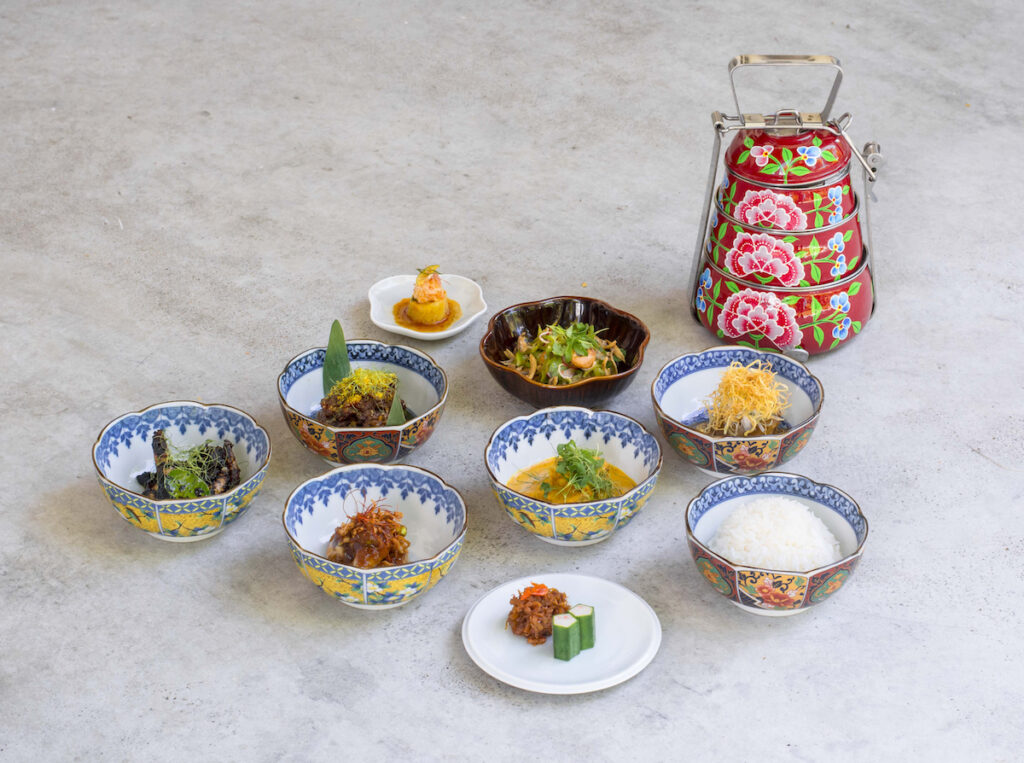
Typical Peranakan dishes
Ayam buah keluak – Buah keluak chicken curry. Buah keluak (Pangium edule) fruit comes from trees in mangrove swamps. It is poisonous, and made edible by a fermentation process, then soaking in water before cooking. A hole is made in the nut to reveal the black kernel, which we eat by scooping it out. It has a nutty, earthy, truffle-like taste, and a texture like mashed chocolate. For ayam buah keluak curry about 30 buah keluak nuts are cooked with a 1-kg chicken, lemongrass, turmeric, chilli, tamarind juce, onions and galangal, and thickened with ground candlenuts. The curry has an enticing black colour.
Rendang – Dry beef coconut curry. Adopted from the Malays, this slow cooked beef curry is made with coconut milk, dried chilli, garlic, onion, tamarind juice, gula melaka, turmeric leaf, galangal, lemongrass and kerisik (toasted grated coconut pounded to a paste).
Babi pongteh – Braised pork with fermented soybean. Pork shoulder, trotters or belly is braised for hours till tender, with dark and light soy sauces, cinnamon, star anise, gula melaka, garlic, shallots, and fermented bean paste (taucheo). Mushroom and potato may be added.
Ikan assam pedas – Light tangy fish curry. Assam pedas means ‘sour spicy’ in Malay referring to the light curry made with tamarind juice, shallots, lemongrass, polygonum leaves, turmeric, chilli and pineapple. Fish and other types of seafood make good assam pedas.
Chap chye – Mixed vegetable stew. Cabbage, jicama, carrot, beancurd sheets, mushroom, lily flower buds, wood ear fungus, glass cellophane noodles, garlic, dried prawn, pork belly and prawns stewed in fermented soy bean chicken stock. The ingredients can be as elaborate and as humble as you choose.
Ngo Hiang – A roll of chopped pork, prawn, water chestnut, mushroom and onion, wrapped in beancurd skin
Quick Chat
CHRISTINA KEILTY, owner of Godmama: What dishes should be introduced to someone who has never tried Peranakan food?
"Start with the classics. Like our Ayam Buah Keluak, which comes with the actual black nuts. You are given a teaspoon to dig out the flavourful flesh inside the nut, put it on top of rice, chicken and gravy and enjoy. You’d also want to try the Babi Assam and Babi Pongteh, with rice, of course. And, for seafood lovers, there is the Sotong Masak Hitam (squid cooked in squid ink and tamarind sauce) as well as the Ikan Gerang Assam (pan-seared sea bass in assam). For the latter, we switched it up by pan-searing the sea bass for a crisp skin to add texture."
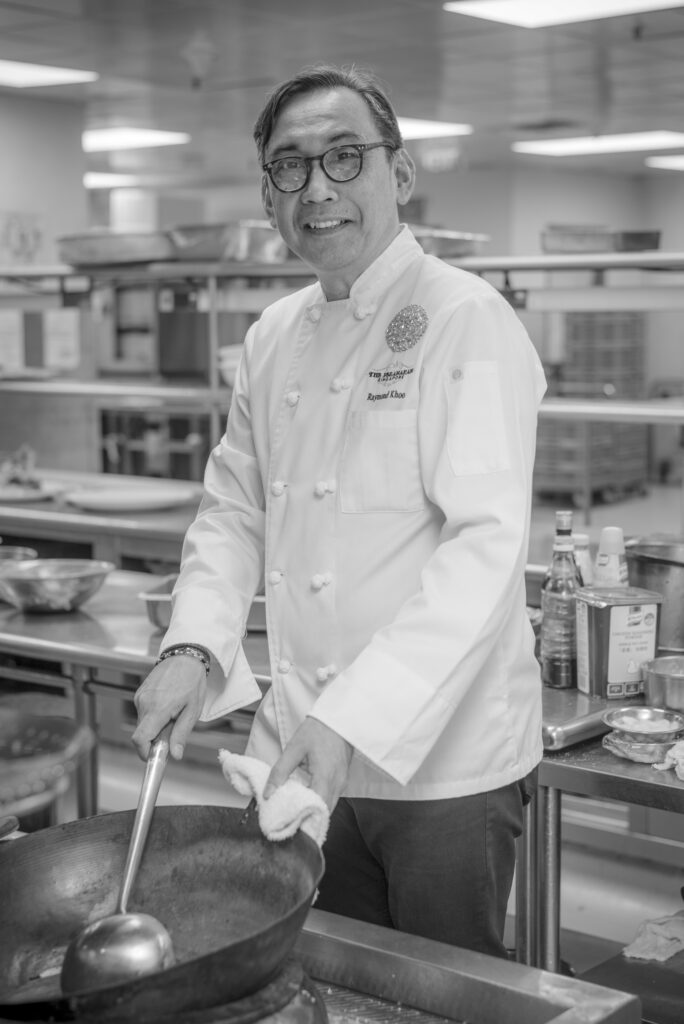
RAYMOND KHOO, owner and chef of The Peranakan Singapore: What makes a dish Peranakan?
"It is made with a lot of spices and not chillies. That’s the biggest misconception about Peranakan food. People associate it with Malay and Indian food where most of the dishes are spicy. However, authentic Peranakan dishes do not use any MSG, but lots of fresh spices and slow cooking methods to bring out the flavours."
Where to eat
Candlenut
17A Dempsey Road, Singapore 249676
One Michelin star and the pleasant greenery of Dempsey draw foodies as chef/owner Malcolm Lee dishes out a mix of traditional and modernist Peranakan dishes. Try the assam sotong hitam, blue swimmer crab curry, wagyu beef rendang, ikan bakar, buah keluak fried rice and mao shan wang durian pengat.
Bibik Violet
28 Orchard Road, Temasek Shophouse #01-05, Singapore 238832
Typical Nonya fare from small bites such as kueh pie tee and ngoh hiang to homestyle dishes such as chap chye, babi pongteh and buah keluak pork rib. Platters such as laksa and nasi lemak classic hit the spot. Desserts: pulut hitam tart, kueh dadah, pineapple and coconut tart.
Godmama
109 North Bridge Road, Funan Mall, #04-07, Singapore 179105
Traditional and modern Peranakan, such as Fried Chicken Wings with Belacan Mayo. The menu is full of homestyle dishes from the recipes of grandma passed down to daughter and granddaughter.
The Peranakan Singapore
Blk 57 Lengkok Bahru, Singapore 151057
Raymond Khoo serves traditional Peranakan food handed down from recipes by his ancestors. Babi ponteh, ayam buah keluak, beef rendang and chap chye are all-time favourites. Dessert: apom Bok Kwa pisang, durian pengat (seasonal), pulot Enti cempedak and plot Enti kelapa.
The Blue Ginger
97 Tanjong Pagar Road, Singapore 088518
This Michelin Bib Gourmand family-run restaurant has been around for years serving favourites such as ngo hiang, babi pong tay, ikan masak assam gulai and ayam buah keluak. Its elegant setting in a shophouse makes it ideal for business luncheons.
Chilli Padi Nonya Restaurant
11 Joo Chiat Place #01-03, Singapore 427744
This affordable, laidback restaurant serves homestyle Peranakan dishes such as ikan assam pedas, ayam buah keluak curry, homemade otah, sotong hitam and itek tim. Save room for desserts include pulut hitam and cendol.
Ivins Peranakan Restaurant
21 Binjai Park, Singapore 589827
Homestyle food in a homestyle setting. The food comes out pretty fast. Favourites include rendang, babi pongteh and itek tim.
Rempapa
2 Paya Lebar Road #01-01 Park Place Residences at PLQ, Singapore 409053
Playing on the words rempah (spice paste) and “papa” chef Damian D’Silva, this interesting eatery showcases the multi-heritage cuisines of Singapore including Peranakan, Eurasian, Malay, Indian, Colonial British and Chinese. Lamb leg rendang, fried Nonya fishcake and slowcooked belly pork with Ah Seng sauce are delicious descoveries.
National Kitchen by Violet Oon
#02-01 National Gallery Singapore, 1 St Andrew’s Road, Singapore 178957
Singapore food personality and true blue Nonya, Violet Oon, serves Peranakan favourites like buah keluak ayam, sambal udang, babi assam and kueh pie tee. The interiors reflect Nonya chic with colourful tiles and classy wood furnishing.