Coffee finds

From cafe to kopitiam, smells of beans and brew lead your nose

Coffee finds

Smells of delicious roasted beans and brews lead your nose

Good local coffee at Kopi More
Martin Lee's coffee boutique

Golden Mile Food Centre, Beach Road

KOPI MORE – LOCAL COFFEE WITH OOOOOOOMPH!

Coffee-kopimore-drink-golden-mile-food-centre

What's Nanyang Coffee?

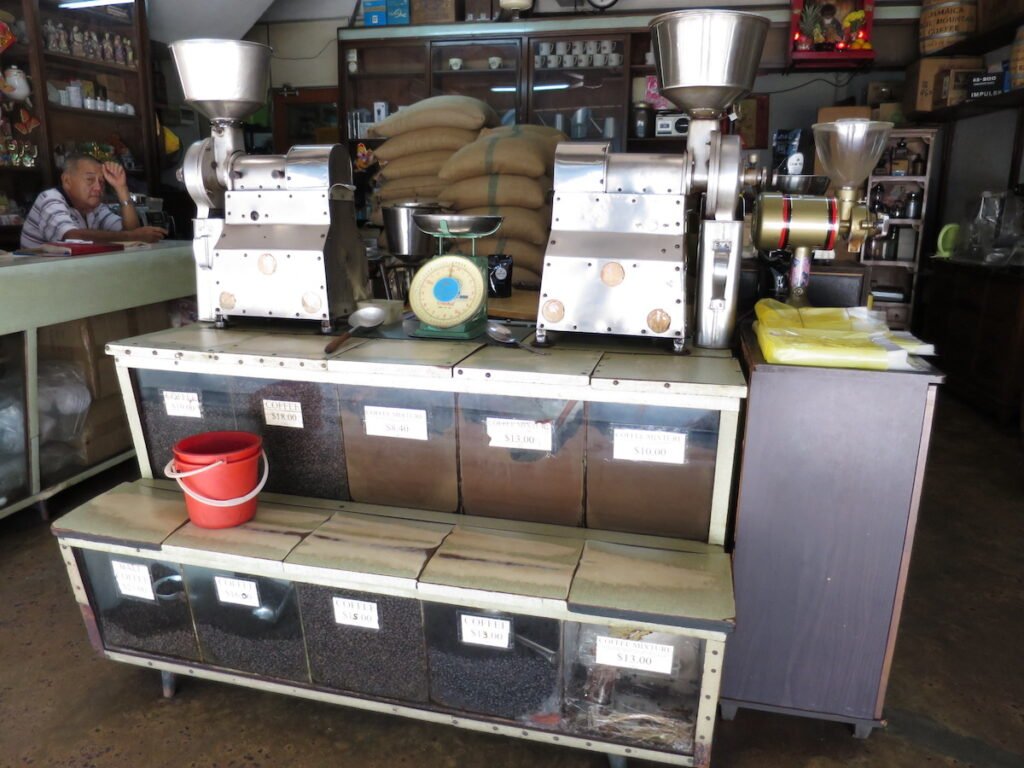
This is traditonal Singapore style coffee beans used for making local coffee known as kopi. The coffee is a blend of robusta and arabica beans sourced mainly from Indonesia and Columbia. Roasted with margarine, sugar and corn over charcoal to produce a smoky, caramelised flavour, the beans are ground and sent to the kopitiams, where they become your kopi fix.

Left - Lawrence Tan makes good Singapore coffee with a very expensive espresso machine

How to order your Local Kopi

Kopi – Coffee with evaporated milk and condensed milk
Kopi gao – Strong coffee with evaporated milk and condensed milk
Kopi di lo – Very strong coffee without added water, evaporated milk and condensed milk
Kopi po – Weak coffee more water, evaporated milk and condensed milk
Kopi siu dai – Coffee less sweet, evaporated milk and less condensed milk
Kopi C – Coffee with evaporated milk and sugar (no condensed milk)
Kopi O – Coffee black with sugar, no milk
Kopi kosong – Coffee black no sugar no milk
Kopi peng – Coffee with ice

The coffee at Kopi More is perhaps the best coffee in Singapore. It is a Nanyang- style coffee known as kopi by the locals

Golden Mile Food Centre
505 Beach Road #B1-49
Singapore199583

You smell it even on the outskirts of Golden Mile Food Centre. Coffee that you need to have!

At his stall called Kopi More at the basement of the Food Centre, Lawrence selects a customised blend of robusta and arabica coffee beans from Columbia and Indonesia to create his famous coffee. It is a local Nanyang-style that is packed with body and smoky flavour tones. The coffee beans are ground on order and passed through a very expensive Italian espresso machine into a traditional white porcelain cup with matching saucer. For a kopi order, evaporated milk and condensed milk are stirred in.

The traditional way of making kopi

Kopi More may be breaking the traditional way of making kopi with that espresso machine, but the queues do not mind at all.

Here’s how you make kopi the traditional Singapore way:

You need 2 stainless steel jugs and 1 stainless steel mug (555 brand): Grind Nanyang style coffee beans into Jug 1, add hot water, stir and let steep for 3 minutes. The jug sits on a hot plate to keep the brew hot. Using a cotton sock coffee strainer, strain the coffee into Jug 2 and pour coffee into porcelain cup 3/4 full. Use mug to scoop hot water from dispenser and top up cup. Stir in condensed milk and evaporated milk to your liking.


Albert Centre, Queen Street

THE COFFEE XPRESS – VIETNAMESE BEANS AND EXPERIENCE

The shop also sells green beans for your own roasting. You can easily toast the beans in a dry frying pan or in an oven toaster until fragrant and a deep brown or golden brown colour

WHAT IS SCREEN 18 COFFEE BEANS?

Screen 18 refers to the hole-size of the sorting screen used to differentiate the size and quality of the beans. Screen 18 is a large-size coffee bean (7mm) that offers superior tasting coffee. Screens are numbered 8 to 20. 8 Screen usually consists of broken bits and shells of coffee beans.

Left - Coffee enthusiast Martin Lee sells coffee harvested from his boutique plantation in the highlands of Vietnam and has a lot of knowledge of bean and brew

I bought a packet of Queen Moka Cau Dat (500g $29.50). It is 100% single origin Screen 18 medium roast known. Known as the Queen of Coffee, it is made with moka beans, which has origins in Mocha, Yemen, and has dark chocolate flavour profiles

Coffee enthusiast Martin Lee creates a niche business selling top-end Vietnamese beans

270 Queen Street, #03-96 Albert Centre, Singapore 180270

More irresistible coffee smells hit you. This time it comes from the second floor of the Food Centre, where you spot silvery packets of coffee beans lining the shelves. They hit the light and wink at you like cheeky friends.

It’s a little knook of a shop but packs a punch of coffee fun. The Coffee Xpress retails an interesting collection of coffee from the highlands of Vietnam, where Martin Lee together with a few partners, owns a boutique plantation.

Apart from coffee beans you’ll see all kinds of coffee paraphernalia lining the shelves: French press, drip filters, antique grinders, percolaters, traditional metal kopitiam vessels.

Coffee Know-how

Martin shows me two coffee beans in his hand. Which is robusta, which is arabica? he asks. These are the most popular species that make our coffee. I don’t know, I say.

With his guidance I notice that arabica is more oval and long, while robusta is rounder and chubbier; the split down the middle of arabica is curved like an ‘S’ while that of robusta is straight.

Arabica with its elegant bright, fruity tones is more expensive because it is cultivated in the highlands and has low resilience to pests and weather changes. The hardier robusta is bold with nutty and dark chocolate profiles with a higher caffeine punch.

When it comes to preference it truly is up to the individual. Usually arabica beans are blended with robusta for a more balanced coffee brew.

I learned so much about coffee and cultivation and brewing and roasting in my 5- minute chat with Martin. And you can tell he loves telling his stories by the sparkle in his eyes.

Balestier Road

LAM YEO COFFEE POWDER FACTORY

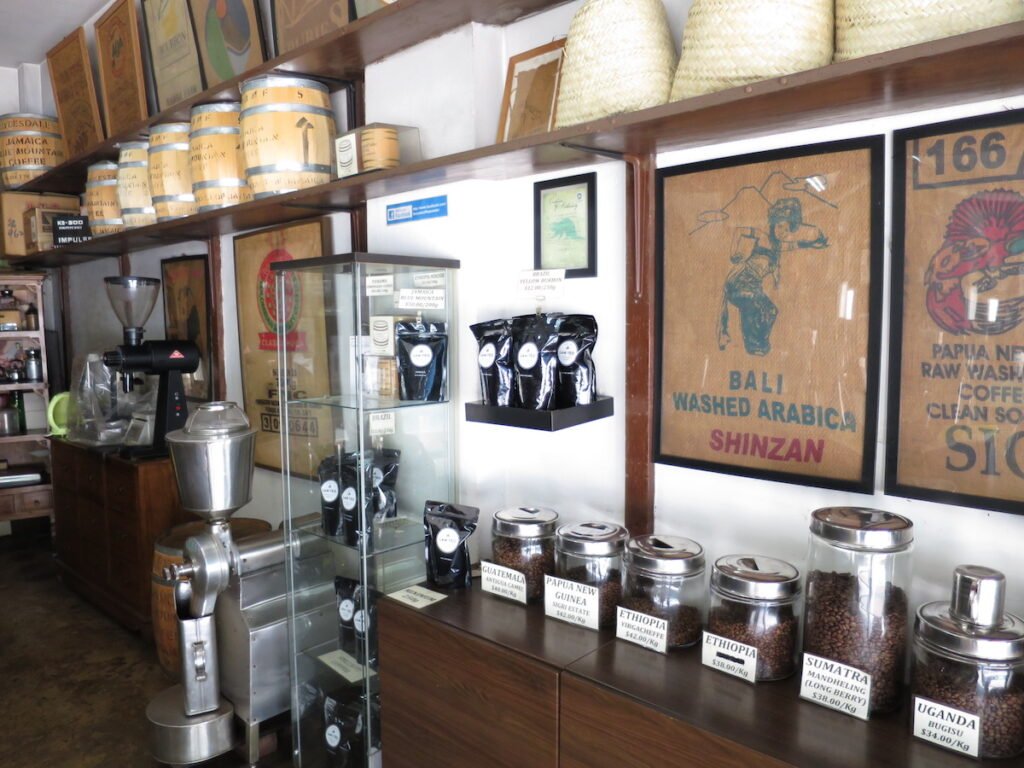
Traditional Nanyang-style coffee beans as well as gourmet arabica and robusta beans from Indonesia, Central America and Africa

This quaint old-school coffee establishment has been around since 1959.

328 Balestier Rd, Singapore 329760

Lam Yeo, which means “Nanyang” in the Hokkien dialect, as owner Tan Peck Hoe preserves the tradition of roasting coffee beans with sugar and margarine for that distinct Nanyang “kopi” character of char and sweet smokiness

You will also find gourmet arabica and robusta beans from Africa, Indonesia and Central America. These are roasted in the espresso tradition and are ground only when you buy to ensure its freshness.

Coffee Chat

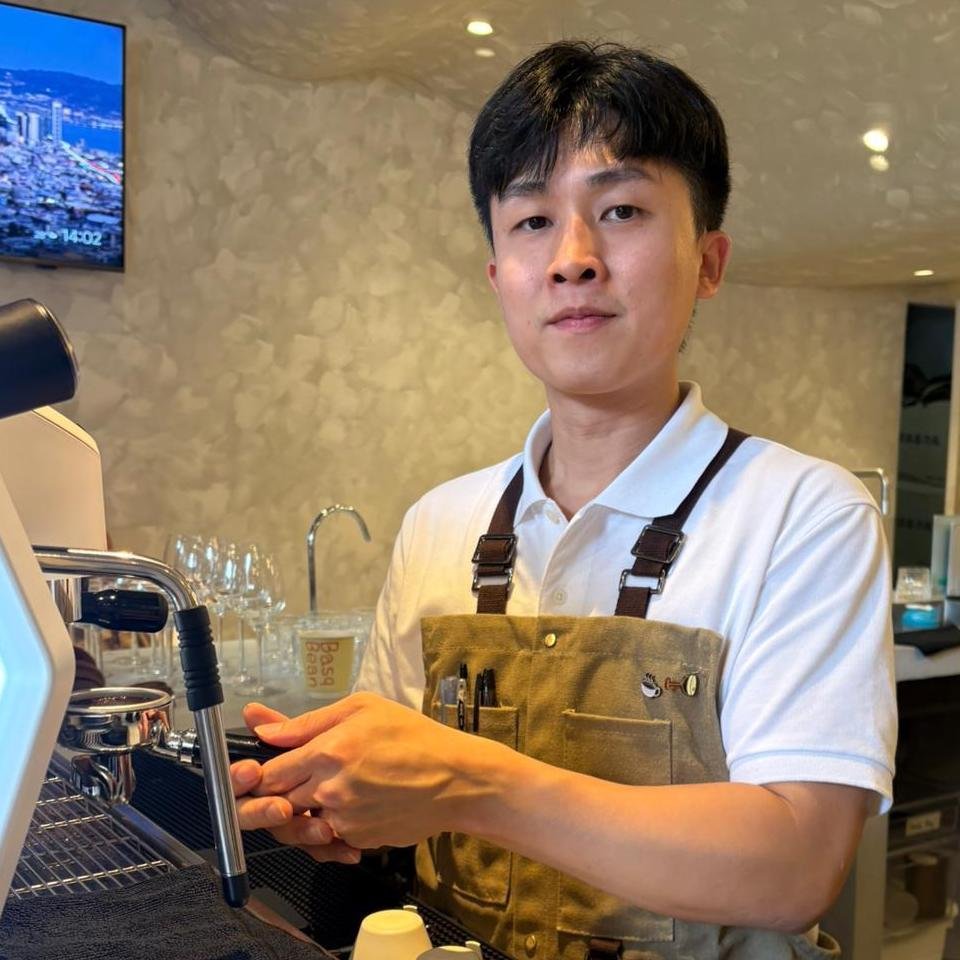
TEH YONG JIAN, head barista of Basq & Bean, enlightens us on the coffee you find in Singapore

"The main difference between espresso served in cafes and kopi served in kopitiams lies in the beans, roasting, and brewing methods, where cafés typically use Arabica beans while kopitiams mainly use Robusta beans."
TEH YONG JIAN
Head barista of Basq & Bean

1. Can you tell us the main difference between espresso served at cafes and the kopi (local Nanyang coffee) served at kopitiams?
The main difference between espresso served in cafes and kopi served in kopitiams lies in the beans, roasting, and brewing methods, where cafés typically use Arabica beans while kopitiams mainly use Robusta beans.

2. What is your favourite single origin bean producing region why? And what is your favourite espresso drink?
Chiang Mai, mainly because the beans produce a unique flavour such as dark cherry, glutinous rice, and red wine. My favorite espresso drink is a latte with our Toasty Glutinous Rice (medium roast).

3. What is your favourite kopi at kopitiams?
Kopi gao (strong)

4. Arabica is very expensive due to its production, sensitivity and hilly regions. Do consumers sacrifice quality when they go for robusta or liberica beans?
It depends, as every consumer has different taste preferences. Some specifically look for Robusta beans for their strong, bitter, nutty flavour.

5. Is hand-dripped coffee really that much better compared to pressure machines?
No, it’s just a different brewing method. Hand-dripped coffee gives a cleaner, lighter body, while pressure machines produce a more concentrated and fuller-bodied drink.

6. What advice do you have for a young student who wants to be a good barista?
Focus on attitude, passion, and hygiene — these are the foundations of becoming a good barista. With consistency and curiosity, the skills will naturally follow.


Story by Carol Kraal